
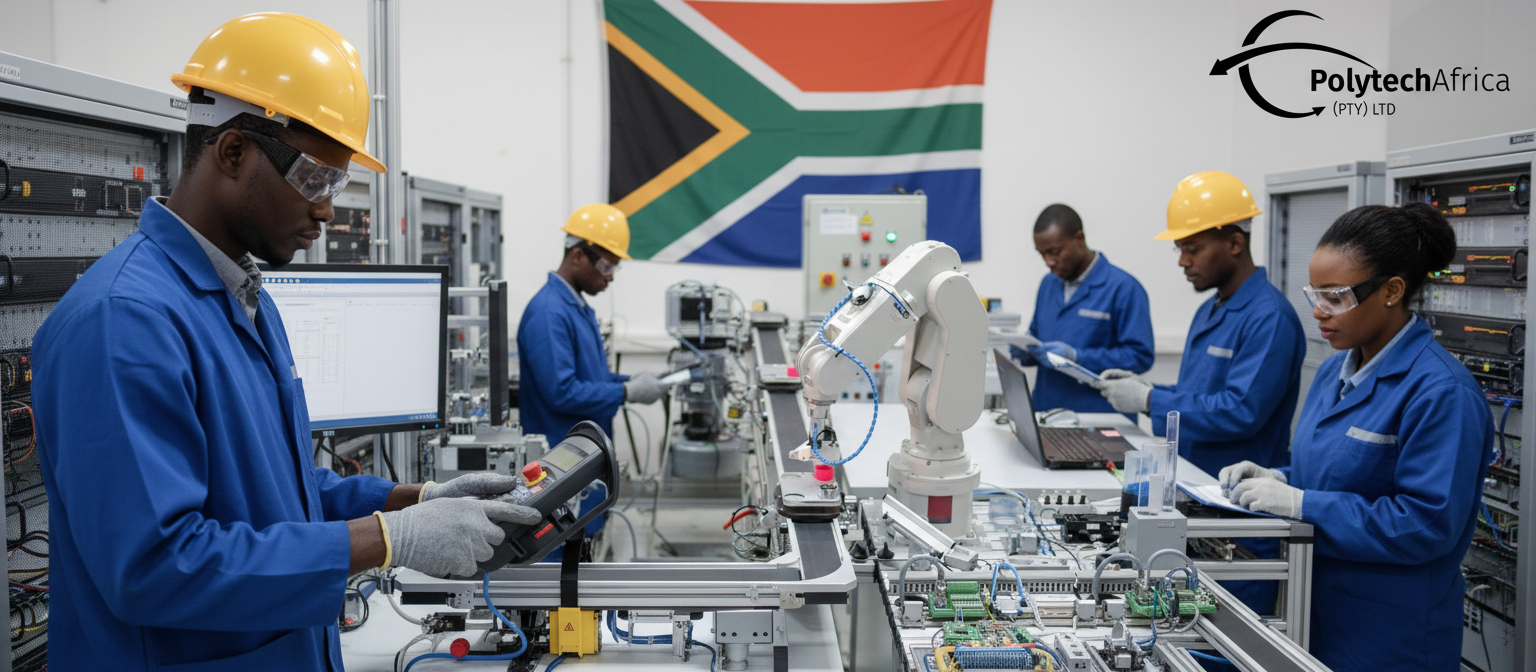
Why Mechatronics Is One of the Most In-Demand Skills in South Africa in 2026
South Africa’s industrial sector is undergoing a structural shift. Automation, advanced manufacturing, and smart production systems are no longer limited to large multinationals — they are becoming standard across local manufacturing, logistics, energy, and processing environments.
As this shift accelerates, mechatronics has emerged as one of the most critical technical skills in the South African economy.
Mechatronics and South Africa’s critical skills shortage
According to the Department of Higher Education and Training, engineering-related occupations — including automation and mechatronics technicians — consistently appear on South Africa’s Critical Skills List. This reflects a sustained national shortage of technicians who can work across mechanical, electrical, and control systems.
Industry bodies echo this concern. The Manufacturing Circle has repeatedly highlighted that skills shortages are one of the biggest constraints to industrial growth, particularly as manufacturers invest in modern, automated production lines.
What is driving demand for mechatronics technicians?
Several long-term trends are driving the demand for mechatronics skills:
-
Increased automation in factories, warehouses, and processing plants
-
Ageing technical workforces, with many experienced artisans nearing retirement
-
Localisation of manufacturing, driven by supply-chain risk and cost pressures
-
Industry 4.0 adoption, including smart machines, sensors, and automated control systems
Globally, the World Economic Forum identifies automation and advanced manufacturing roles as among the fastest-growing job categories worldwide — trends that strongly influence emerging economies such as South Africa.
Why mechatronics stands apart from traditional trades
Traditional trades often operate in silos. Mechatronics integrates:
-
Mechanical systems
-
Electrical and electronic components
-
Automation and PLC control
-
Diagnostics and fault-finding
This multi-disciplinary skill set allows technicians to troubleshoot entire systems, making them significantly more valuable in modern industrial environments.
Employers increasingly prioritise multi-skilled technicians who reduce downtime, limit reliance on external contractors, and support operational efficiency.
Career pathways for mechatronics technicians
Graduates with applied mechatronics training are in demand across:
-
Manufacturing and processing plants
-
Automation and systems integration companies
-
Logistics and warehousing operations
-
Renewable energy and infrastructure projects
Typical roles include:
-
Mechatronics Technician
-
Automation Technician
-
Maintenance Technician
-
Junior Automation Specialist
Occupational qualifications and job readiness
Industry demand is shifting away from purely academic pathways toward occupational qualifications that prioritise applied competence.
The NQF Level 5 Occupational Certificate: Mechatronics Technician is designed specifically to meet workplace requirements — producing graduates who are job-ready, not just theoretically qualified.
Institutions such as PolytechAfrica play a key role in aligning technical education with real operational needs.
Why 2026 matters
With ongoing investment in infrastructure, manufacturing, and automation, the demand for skilled mechatronics technicians is expected to continue rising beyond 2026.
For students, this represents a future-proof career pathway.
For employers, it highlights the urgency of developing new technical talent pipelines.
Sources & industry references:
Department of Higher Education and Training (DHET) • Manufacturing Circle • World Economic Forum


